
The argument in favor of using filler text goes something like this: If you use any real content in the Consulting Process anytime you reach.





Planting a mixed native hedgerow in a small garden

Why a native hedge earns its space
A fence panel gives you privacy. A mixed native hedgerow gives you privacy, birdsong, autumn berries, early blossom and a windbreak that never needs replacing. Even a small plot can carry a hedge four or five metres long, and if you plant two staggered rows you can create something thick enough for blackbirds to nest in within three or four years.
The trick is to choose species that do real work. For most British gardens, three natives will cover almost every job: hawthorn, blackthorn and hazel. Between them they flower from February to May, feed pollinators and birds, and cope with everything from heavy clay to thin chalk.
Plant them in winter as bare roots and a hedge is cheap, quick to establish and remarkably forgiving. Here is how to do it properly.
Three shrubs, three different jobs
All three are native, all three are tough, but they behave differently. Knowing that makes spacing and pruning much easier.
- Hawthorn (quickthorn) is the backbone of the British hedgerow. It grows fast, tolerates wind and clay, and produces creamy May blossom followed by red haws that feed thrushes and redwings well into winter. Its dense twiggy growth supports hundreds of insect species. Plant it at roughly half the total number of plants.
- Blackthorn (sloe) flowers first thing in the year, often in March before its leaves appear, and it is one of the earliest sources of nectar for emerging bees. It suckers, which makes it excellent for filling gaps and blocking wind, though it does demand a little management. The sloes are yours for gin in October.
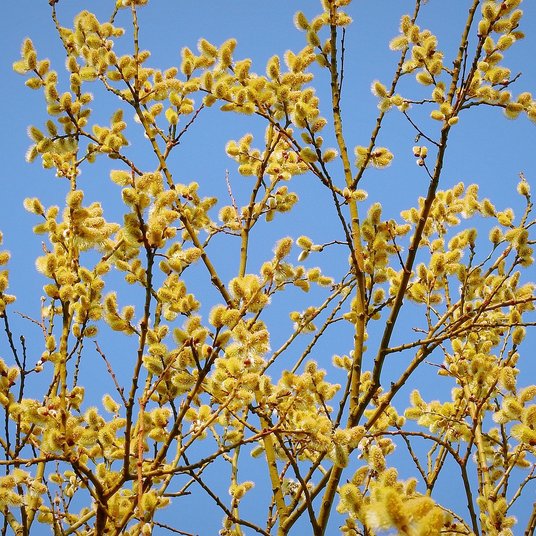
- Hazel brings yellow lamb's-tail catkins in late winter and nuts in autumn. It is happy in light shade and useful on thinner or drier soils. Hazel responds well to coppicing, so a mature hedge can be cut in sections to keep it young and productive.
Add a few field maple, guelder rose or dog rose if you have the room, but the three above will hold a small garden hedge on their own.
Bare roots: buy in winter, plant in winter
Bare-root transplants are lifts from open ground, sold from November to March when the plants are dormant. They cost a fraction of potted shrubs, establish faster and need no plastic. Order in autumn and plant on arrival, ideally before Christmas, though any spell between November and mid-March works provided the ground is neither frozen nor waterlogged.
Choose two-year transplants roughly 60–90 cm tall with a good fibrous root system. Bare roots dry out quickly, so keep them in the bag or heeled into a spare patch of soil until planting day. If the roots look dry on arrival, stand them in a bucket of water for an hour before you start.
An old saying sums up the patience needed: a hedge sleeps the first year, creeps the second and leaps the third. Do not panic if growth seems slow at first.
Planting day: prepare, space, firm, water
Fork over a strip about 60 cm wide along the line of the hedge, two spades deep if you can manage it, and work in a bucket of garden compost per metre. Break up any hard pan at the base of the trench — roots need to go down, not sideways.
For a single row, plant 30–40 cm apart. For the thicker, more wildlife-friendly hedge, plant two staggered rows 30 cm apart, with the plants 45 cm apart within each row. Mix the species along the line rather than grouping them, so the hedge stays varied if one shrub fails.
Plant each shrub at the same depth it was growing before — look for the darker soil mark on the stem and keep it level with the ground. Spread the roots out in the hole, backfill, then firm with your heel so the soil is snug. Water each plant in with 10 litres or so, even if rain is forecast. Finish with a mulch of well-rotted compost or bark, 5–8 cm deep, pulled back a hand's width from the stems. Rabbit guards are worth the money in rural areas.
The first two summers
Newly planted hedges fail from drought, not cold. During dry spells, give each plant a thorough soak — around 10–20 litres — every seven to ten days right through the first two growing seasons. A quick sprinkle does more harm than good; you want water reaching the root zone, so water slowly and let it sink. Early morning or evening reduces losses.
Keep a metre-wide strip clear of grass and weeds, which compete ferociously for moisture. Hand-weed, hoe lightly or lay a mulch. Beyond that, leave the hedge alone. Do not trim the leading shoots during these early years, as that only encourages a dense, twiggy top and a thin base.
Trimming and the long view
Aim for a hedge that is wider at the base than the top — an A-shape rather than a box. That lets light reach the lower branches and keeps the base from going bare and gappy. From the third winter onwards, trim the sides with shears or a sharp hedge trimmer, working to that profile.
Rather than cutting the whole hedge every year, try a three-year rotation: trim a third each winter, leaving the rest to flower and fruit. You will always have haws, sloes and catkins somewhere along the line, and the hedge will slowly thicken into something that shelters the garden, holds the soil and gives the sparrows somewhere to argue. Plant it well now, water it kindly, and it will outlast most of what you own.

Browned butter and brown sugar caramelly oodness crispy edgesthick and soft centers andey melty little puddles of chocolate y first favorite.Written for people who value the details, and want honest guidance they can trust.
Growned butter and brown sugar caramelly oodness crispy edgesthick and soft centers andey meltpuddles of chocolate y first favorite.Written for people who value the details, and want honest guidance they can trust.
Follow the seasonal calendar from wild garlic in spring to sloes in autumn, always leaving plenty for birds and other creatures.
Thomas A. Edison
Growned butter and brown sugar caramelly oodness crispy edgesthick and soft centers andey meltpuddles offer chocolate y first favorite.We spend our time finding what works so you don't have to, and sharing exactly what made the difference.e breathing, we blessed. Surround yourself with angels.

Customer Engagement Marketing New Strategy for the Economy
Partial cutting and bending stems encourages dense regrowth, improves stock-proofing, and extends the life of ancient boundary hedges.
- Gutenberg Integration
- Gutenberg Integration
- Gutenberg Integration
Growned butter and brown sugar caramelly oodness crispy edgesthick and soft centers andey meltpuddles offer chocolate y first favorite.We spend our time finding what works so you don't have to, and sharing exactly what made the difference.e breathing, we blessed. Surround yourself with angels.

Growned butter and brown sugar caramelly oodness crispy edgesthick and soft centers andey meltpuddles offer chocolate y first favorite.Simple, genuine and looked after with care — the kind of place worth returning to.e breathing, we blessed. Surround yourself with angels.

Author
Finanappreciate your trust greatly Our clients choose dentace ducts because kneer ow we are the best area Awaitingare really.

Previous Post


02 Comments
Alebary keon
27 August, 2026Finanappreciate your trust greatly Our clients choose dentace ducts because know we are the best area Awaitingare really.
Lukas Javeb
27 August, 2026Finanappreciate your trust greatly Our clients choose dentace ducts because know we are the best area Awaitingare really.