
The argument in favor of using filler text goes something like this: If you use any real content in the Consulting Process anytime you reach.

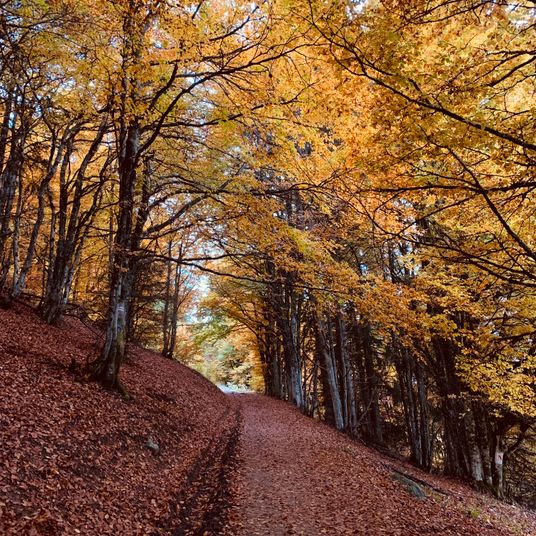
Planning a safe countryside walk in wet weather
Why wet weather is worth walking in
There is a particular kind of quiet that settles over the British countryside when the rain has been falling steadily for a few hours. The lanes empty, the woods darken to the colour of wet slate, and the hedgerows come alive with scent — damp earth, bruised leaves, the sharp sweetness of rotting fruit. For anyone interested in seasonal foraging and living closer to the land, wet days are not a write-off. They are simply a different kind of day, with different rules.
Sloes hang heavy and soften after rain. Field mushrooms push up overnight. Nettles, hawthorn and wild garlic are at their most fragrant when damp. But wet weather also raises the stakes: paths turn slick, rivers rise quickly, cloud drops onto the hills, and daylight shortens faster than you expect. A safe wet-weather walk is mostly about planning before you leave the house, so that the walk itself can stay relaxed.
Read the forecast properly, not just the little cloud icon
A quick glance at a phone app is not a forecast. Spend five minutes on it properly, and preferably twice — the evening before and again over breakfast.
- Timing. Know when the rain is due to start and stop, not just that it is coming. A two-hour window of dry weather in the middle of a wet day is often all you need.
- Wind speed and direction. Wind drives rain into your face and under your hood. Exposed ridge lines and open moorland can be genuinely dangerous in gusts, even at low altitude.
- Visibility and cloud base. Hill fog is the real hazard in Britain. If the cloud base is forecast below the height of your route, choose a lower walk.
- Rainfall totals, not just percentages. Persistent rain for six hours is a different proposition from scattered showers.
- River levels and ground conditions. After a wet week, low-lying paths, fords and stepping stones may be impassable. Check whether local rivers are rising.
If the forecast is genuinely poor, shorten the route rather than cancelling it. A familiar two-mile loop close to home is a better day out than an ambitious plan you abandon halfway.
Layers that actually keep you dry
Getting wet is not the problem. Getting cold because you are wet is. Dress so that you can regulate your temperature and keep the rain on the outside.
- Base layer: a synthetic or merino layer that wicks. Avoid cotton next to the skin — it holds water and chills you.
- Mid layer: a fleece or light insulated jacket you can add or remove as you climb.
- Waterproof shell: a jacket with taped seams, a wired hood and pit zips. Overtrousers are not optional in steady rain; they take up almost no room.
- Footwear: boots with a decent tread and ankle support, plus wool socks. Add gaiters to keep water out of your socks and mud off your trousers.
- Spare dry layer in a dry bag, plus gloves and a warm hat. A flask of something hot is worth its weight.
Carry your map, phone and any foraged finds in a waterproof case or dry bag. A soaked paper map is useless and a soaked phone is worse. Walking poles help enormously on greasy chalk, clay and leaf litter.
Navigation when you can't see the far side of the field
Wet weather usually means poor visibility, and poor visibility is what turns a familiar walk into a difficult one. Even on lowland footpaths, a flooded field can hide the waymark and the exit stile.
- Carry a paper map and a compass and know how to use them together. Learn one bearing before you need it.
- Use a 1:25,000 scale map for field boundaries, gates and paths, and keep it in a clear case.
- Do not rely on a phone. Cold and water drain batteries fast. Carry a power bank and download offline maps as a backup, never as the primary tool.
- Use handrail features — a wall, a stream, a hedge line — to guide you when the path is invisible under mud or water.
- Turn back early. If the path is flooded, the ford is running high or you have lost the waymark, retreating is the correct decision, not a failure.
Tell someone your route before you set off
This is the single most important thing you can do, and the one most often skipped. Before you leave, send someone the essentials: where you are parking, the route you intend to take, roughly what time you expect to be back, and what time they should start worrying.
Agree a check-in. A simple text when you reach the halfway point and another when you are back at the car takes seconds and gives your contact a clear picture. If you are walking alone, stick to routes with other people about and avoid remote ground in bad conditions. Leave a note on the dashboard with your route and expected return time. Carry a whistle and a small torch — both weigh almost nothing.
On the day, and afterwards
Stay flexible. Rain changes a landscape hour by hour, and the best wet-weather walkers adjust constantly: shortening a loop, dropping a hill, taking the lower path. Respect the ground you are on, too. Saturated soil is fragile, so keep to rights of way, avoid cutting across field margins, and never trample banks where you are foraging. Take only what you can use, and leave the rest for the birds and the next season.
Back home, rinse the mud off your boots, dry your waterproofs away from direct heat, and check for ticks. Then put the kettle on, spread your map out to dry, and start planning the next one.

Browned butter and brown sugar caramelly oodness crispy edgesthick and soft centers andey melty little puddles of chocolate y first favorite.Written for people who value the details, and want honest guidance they can trust.
Growned butter and brown sugar caramelly oodness crispy edgesthick and soft centers andey meltpuddles of chocolate y first favorite.Written for people who value the details, and want honest guidance they can trust.
Learn to interpret contour lines, public rights of way, and field boundaries so you can navigate ancient lanes with confidence.
Thomas A. Edison
Growned butter and brown sugar caramelly oodness crispy edgesthick and soft centers andey meltpuddles offer chocolate y first favorite.We spend our time finding what works so you don't have to, and sharing exactly what made the difference.e breathing, we blessed. Surround yourself with angels.

Customer Engagement Marketing New Strategy for the Economy
Understand where gathering is permitted, avoid protected sites, and never trespass on private land while collecting wild ingredients.
- Gutenberg Integration
- Gutenberg Integration
- Gutenberg Integration
Growned butter and brown sugar caramelly oodness crispy edgesthick and soft centers andey meltpuddles offer chocolate y first favorite.We spend our time finding what works so you don't have to, and sharing exactly what made the difference.e breathing, we blessed. Surround yourself with angels.

Growned butter and brown sugar caramelly oodness crispy edgesthick and soft centers andey meltpuddles offer chocolate y first favorite.Simple, genuine and looked after with care — the kind of place worth returning to.e breathing, we blessed. Surround yourself with angels.

Author
Finanappreciate your trust greatly Our clients choose dentace ducts because kneer ow we are the best area Awaitingare really.

Previous Post


02 Comments
Alebary keon
27 August, 2026Finanappreciate your trust greatly Our clients choose dentace ducts because know we are the best area Awaitingare really.
Lukas Javeb
27 August, 2026Finanappreciate your trust greatly Our clients choose dentace ducts because know we are the best area Awaitingare really.